
City Museum (Kaunas, Lithuania)
City Museum (Kaunas, Lithuania)
Kaunas City Museum is where the first-ever puppet animation film, LUCANUS CERVUS, was made in 1910 by Kaunas-raised early cinema pioneer Władysław Starewicz.
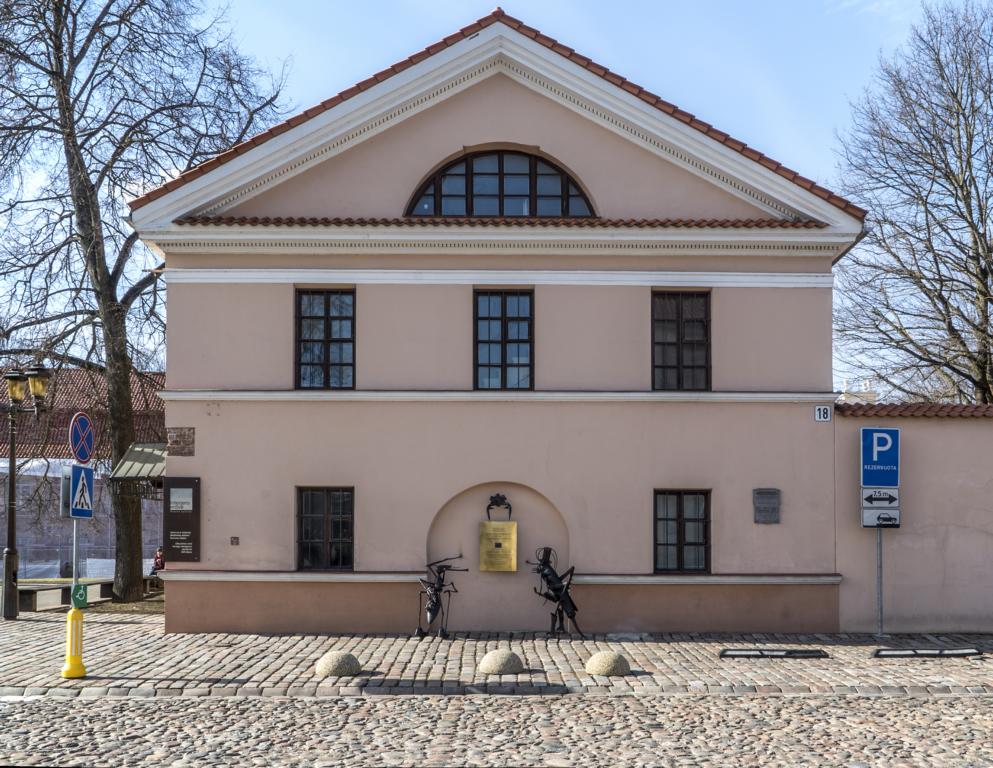
Ladislas Starevich (Władysław Starewicz) is a foundational figure in the history of world animation, best known for pioneering stop-motion and puppet animation in the early twentieth century. A writer–director–cinematographer–set designer, he created more than 100 films in a career spanning half a century. He helped shift animation from a simple novelty of moving drawings into a cinematic art form rooted in three-dimensional performance. His formative years in Kaunas (Lithuania) where he served as Director of the Museum of Natural History, were crucial to these innovations: while producing documentary films for the museum, he began experimenting with animation as a practical solution to filming live insects. This led to LUCANUS CERVUS (1910), in which he used articulated insect puppets to simulate natural behaviour, marking one of the earliest instances of stop-motion animation as a narrative and performative medium. Subtle movements and dramatic interplay in his earliest films created a new expressive language that would influence animation for decades to come. Starevich’s subsequent films expanded these technical breakthroughs into richly expressive works that combined dark humour, psychological complexity, and social satire, notably THE CAMERAMAN’S REVENGE (1912) one of the earliest examples of self-reflexive cinema, in which the filmmaker addresses cinema’s clichés. After emigrating to France, he demonstrated the viability of feature-length puppet animation with LE ROMAN DE RENARD, influencing generations of animators across Europe and beyond. His legacy rests on redefining animation as a cinema of animated objects—capable of sustained narrative, emotional depth, and formal sophistication—thereby securing his place as one of the medium’s true originators.